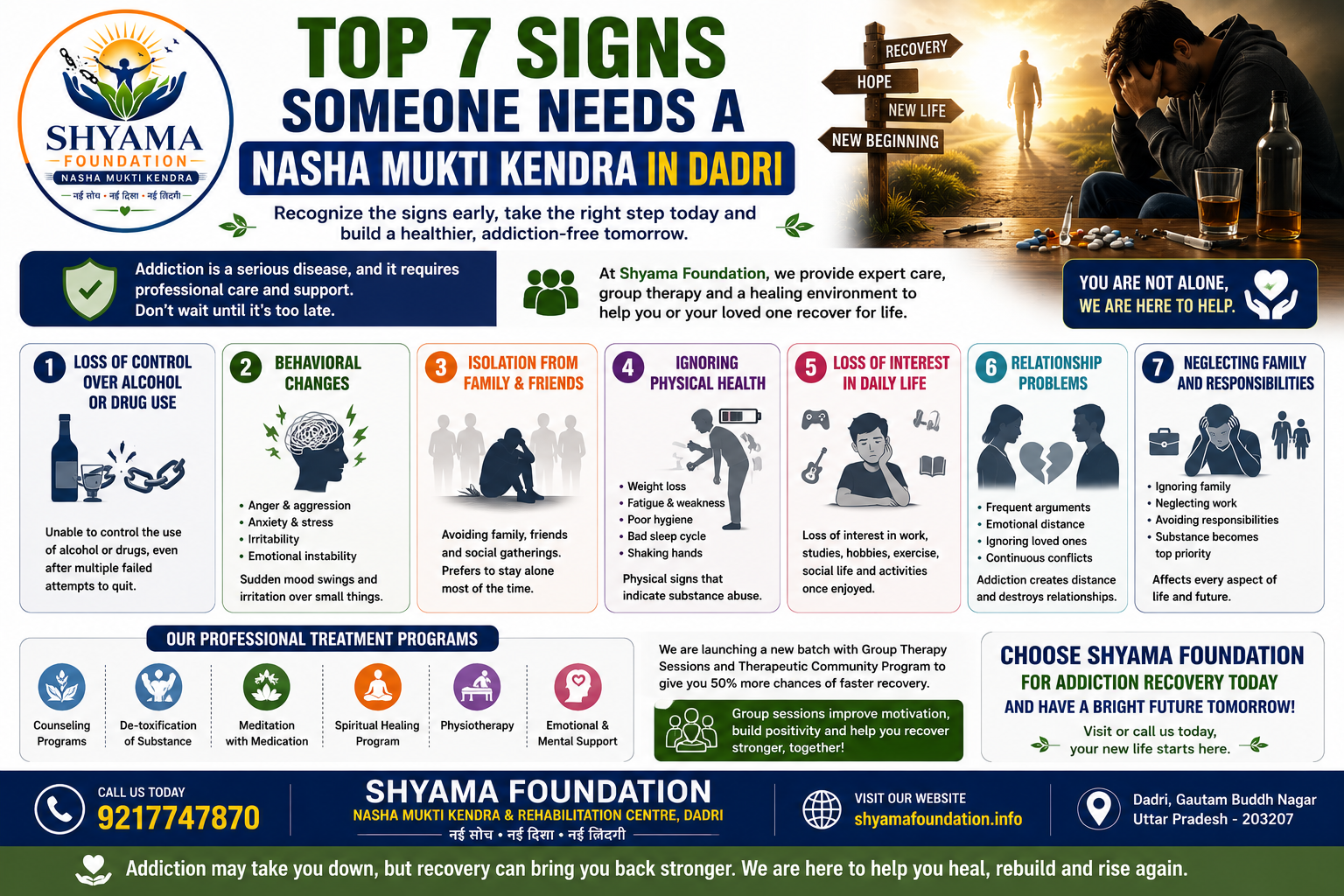
Top 7 Signs Someone Needs a Nasha Mukti Kendra in Dadri
Addiction can slowly affect a person’s physical health, mental stability, relationships, social life, career, future, and overall quality of life. Once a person becomes addicted to alcohol, drugs, or nicotine, recovery becomes difficult without proper effort and professional support.
Addiction is a serious disease, and like any critical health condition, it should not be treated at home without expert supervision.
At Shyama Foundation, we provide professional addiction treatment programs including:
-
Counseling sessions
-
Detoxification programs
-
Meditation and medication support
-
Spiritual healing therapies
-
Physiotherapy
-
Emotional and mental wellness support
If you or your loved one is struggling with alcohol, drug, cocaine, heroin, or nicotine addiction, you are at the right place.
Shyama Foundation is also launching new recovery batches with group therapy sessions and Therapeutic Community (TC) programs. These programs help patients recover faster by creating a supportive and motivating environment.
Just like group study improves learning and productivity, group counseling helps patients stay motivated and emotionally stronger throughout the recovery process.
1. Loss of Control Over Alcohol or Drug Use
One of the biggest signs of addiction is when a person cannot control alcohol or drug consumption, even if they genuinely want to quit.
They may try multiple times to stop using substances but continue falling back into addiction despite knowing its harmful effects.
2. Sudden Behavioral Changes
Addiction often causes major behavioral changes such as:
-
Anger and aggression
-
Anxiety and stress
-
Irritability
-
Emotional instability
-
Mood swings
If you notice these symptoms frequently, it may indicate substance abuse problems that require professional attention.
3. Isolation From Family and Friends
When an addicted person starts isolating themselves from family and close friends, it is often a warning sign of worsening addiction.
They may avoid social gatherings, stop communicating properly, and prefer staying alone most of the time.
This is the stage where professional rehabilitation support becomes extremely important.
4. Ignoring Physical Health
Common physical symptoms of addiction include:
-
Sudden weight loss
-
Weakness and fatigue
-
Poor hygiene
-
Sleep disturbances
-
Shaking hands
-
Low energy levels
If these signs appear regularly in someone consuming alcohol or drugs, it can be an alarming situation that needs immediate care.
5. Loss of Interest in Daily Life
People suffering from addiction often lose interest in activities they once enjoyed, such as:
-
Work or studies
-
Exercise and fitness
-
Learning new skills
-
Social activities
-
Hobbies and personal interests
Substance addiction slowly replaces motivation and positivity with dependency.
6. Relationship Problems
Addiction negatively affects relationships with family, partners, and friends.
Common signs include:
-
Frequent arguments
-
Emotional distance
-
Lack of communication
-
Ignoring loved ones’ feelings
-
Continuous conflicts and misunderstandings
These issues usually become more serious as addiction increases.
7. Neglecting Family and Responsibilities
People struggling with addiction often ignore:
-
Family responsibilities
-
Work commitments
-
Personal goals
-
Financial responsibilities
Substance use slowly becomes their top priority, affecting every aspect of life.
At this stage, professional treatment from a trusted Rehabilitation Centre in Dadri becomes necessary.
Choose Shyama Foundation for Addiction Recovery
At Shyama Foundation Rehabilitation Centre in Dadri, we are committed to helping individuals recover safely and rebuild a healthy, positive, and addiction-free life.
Take the first step toward recovery today.
Feel free to visit us or contact us for professional counseling and rehabilitation support.