
What Happens To Your Body After Quitting Alcohol?
What Happens To Your Body After Quitting Alcohol?
If you have made the life-changing decision to join a rehabilitation centre, it is a great step toward a healthier future, better career, and improved physical and mental well-being.
In the beginning of the recovery journey, patients may feel discomfort, suffocation, or emotional stress. However, as the days pass, the body slowly begins to heal itself. Once alcohol consumption stops, the liver starts recovering naturally. Gradually, patients experience visible improvements such as better sleep, improved mental clarity, higher energy levels, and emotional stability.
At Shyama Foundation, we help individuals recover safely from alcohol and substance addiction through professional therapies, medication, meditation, counseling, and therapeutic community (TC) programs for long-term recovery.
What Happens To Your Body When You Stop Drinking Alcohol?
The moment you stop consuming alcohol, your body starts removing harmful toxins from the bloodstream. These toxins may leave the body through sweating, vomiting, or urination. Both physical and mental changes begin to appear gradually.
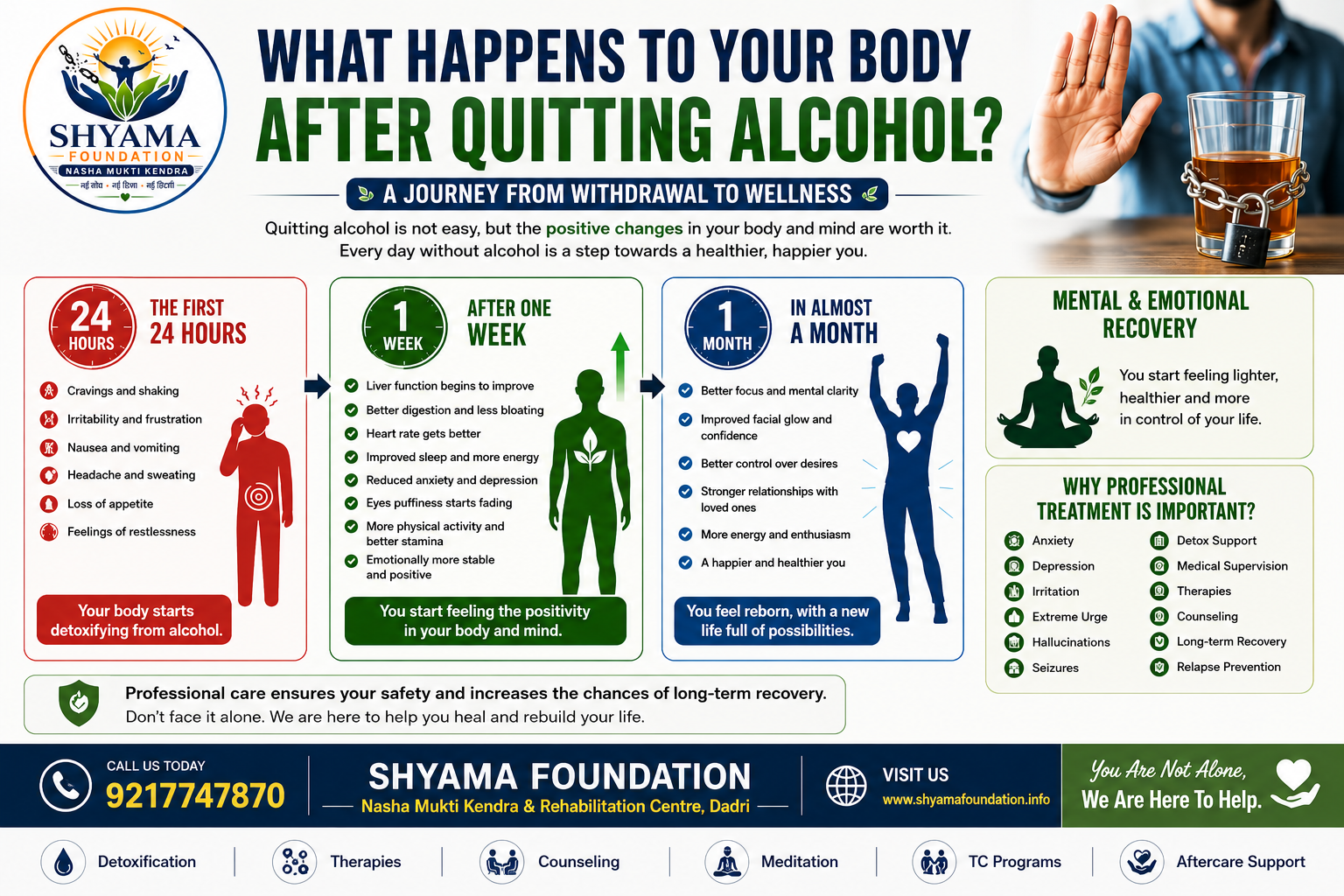
The First 24 Hours After Quitting Alcohol
During the initial stage, patients may experience withdrawal symptoms such as:
-
Strong cravings for alcohol
-
Shaking or trembling
-
Irritation and frustration
-
Vomiting and nausea
-
Headaches and excessive sweating
-
Loss of appetite
-
Emotional instability and severe frustration
These symptoms are common during the detoxification phase and should be managed under professional supervision.
After One Week Without Alcohol
Within a week, patients usually begin noticing positive improvements in their body and mental health.
Positive Changes Include:
-
Liver function begins to improve
-
Appetite starts returning naturally
-
Better digestion and reduced bloating
-
Improved heart rate and blood circulation
-
Reduction in eye puffiness
-
Better emotional control
-
Increased physical strength and energy
-
Reduced anxiety and depression symptoms
This is the stage where patients begin to feel positivity and confidence in their recovery journey.
After One Month of Sobriety
After almost a month, patients feel more stable and clear about their recovery. They start enjoying life again with improved confidence and mental peace.
Changes You May Notice:
-
Better control over cravings and desires
-
Improved focus and mental stability
-
Healthier and brighter facial appearance
-
Better handling of social and personal relationships
-
Improved self-confidence and emotional balance
At Shyama Foundation, one of the best rehabilitation centres in Dadri, we focus on long-term recovery and complete transformation.
Mental & Emotional Recovery After Rehab Sessions
Patients often feel lighter, calmer, and healthier after stopping alcohol consumption and regularly attending meditation, counseling, therapy, and medication sessions.
Recovery is not just about physical healing — it is also about rebuilding emotional strength, confidence, and a positive mindset.
Why Professional Treatment Is Important
Many patients experience severe alcohol withdrawal symptoms, including:
-
Anxiety
-
Depression
-
Irritation
-
Extreme alcohol cravings
-
Hallucinations
-
Seizures
Because of these risks, detoxification and recovery should always be done under the supervision of experienced professionals.
The recovery process can become emotionally and physically challenging, especially during the first week of quitting alcohol. Patients may behave differently due to withdrawal symptoms, making professional care extremely important.
Trying to manage severe addiction recovery at home can be risky without medical support and counseling.
Begin Your Alcohol-Free Life Today
Start your journey toward a healthier and happier future with Shyama Foundation — a trusted rehabilitation centre in Dadri.
Feel free to visit us or contact us today to learn more about our recovery programs and professional support services.