
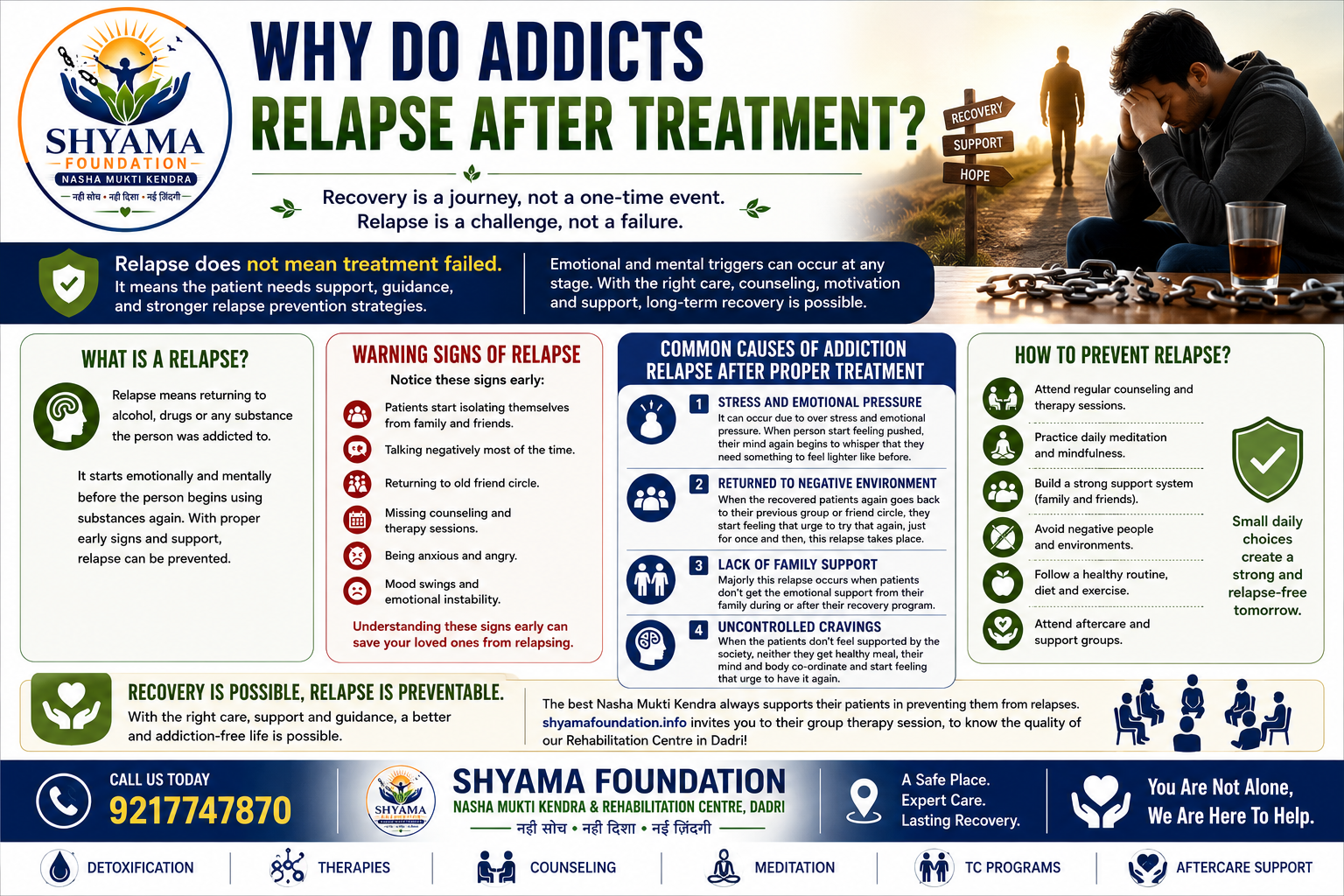
Why Do Addicts Relapse After Treatment?
The addiction recovery process usually takes between 1 and 6 months, but that does not mean patients never need further help after completing treatment. Many patients and families believe that once treatment is completed, addiction is completely cured. However, recovery is an ongoing journey that requires continuous care, emotional support, counseling, and self-control.
Relapse is one of the most common challenges in the recovery journey. A relapse does not mean that the treatment failed. Emotional and mental triggers can occur at any stage of life. When these triggers appear, patients need support, counseling, motivation, and relapse prevention strategies to stay strong.
What Is a Relapse?
Relapse means returning to alcohol, drugs, or any substance a person was previously addicted to. Patients may begin feeling strong cravings again and require immediate counseling, meditation, or therapy sessions to control those urges.
Relapse often begins because of negative surroundings, emotional stress, anxiety, or lack of support. In most cases, relapse starts emotionally and mentally before the person actually begins using substances again.
People should stay aware of early warning signs such as:
-
Constant stress and anxiety
-
Irritation and anger
-
Emotional instability
-
Shaking hands or legs without reason
-
Feeling mentally disturbed on a daily basis
These signs indicate that professional counseling and emotional support may be needed to prevent relapse.
Warning Signs of Relapse That Should Be Noticed Early
Common Warning Signs Include:
-
Patients start isolating themselves from family and friends
-
Negative thinking and negative conversations increase
-
Returning to old friend circles
-
Missing counseling or therapy sessions
-
Increased anxiety and anger
-
Mood swings and emotional instability
Understanding these warning signs early can help protect your loved ones from falling back into addiction.
Common Causes of Addiction Relapse After Treatment
Stress and Emotional Pressure
Stress and emotional pressure are major causes of relapse. When people feel emotionally overwhelmed, their mind may again search for temporary relief through alcohol or drugs.
Returning to a Negative Environment
When recovered patients return to their old environment or friend circle, they may again feel tempted to “try just once,” which can lead to relapse.
Lack of Family Support
Relapse often occurs when patients do not receive emotional support from family members during or after recovery. Feelings of loneliness, isolation, and misunderstanding can push them back toward addiction.
Uncontrolled Cravings
Without proper support, healthy routines, and emotional care, patients may struggle to control cravings. Their mind and body begin demanding the substance again, increasing the risk of relapse.
How Professional Rehabilitation Centers Help Prevent Relapse
The best Nasha Mukti Kendra always support their patients in preventing relapse through counseling, therapy, meditation, emotional care, and long-term recovery programs.
At Shyama Foundation Rehabilitation Centre in Dadri, we provide professional support, group therapy sessions, and relapse prevention strategies to help patients live a healthy and addiction-free life.
Feel free to visit shyamafoundation.info and learn more about our rehabilitation and recovery programs.